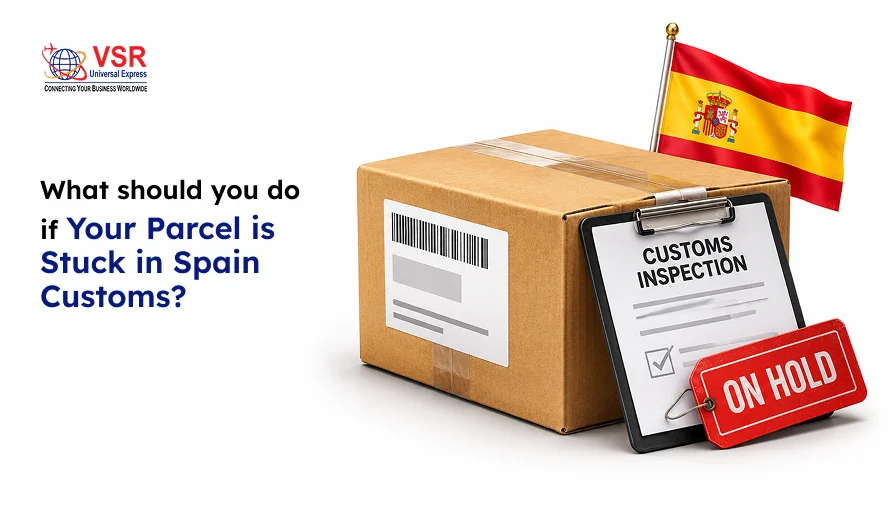
International parcel delivery has made it easier for individuals and businesses to send documents, gifts, personal belongings, and commercial products across different countries. Spain is an important destination for international shipments from India, with many people sending parcels to family members, friends, business partners, and customers. However, sometimes an international shipment may get delayed after reaching the destination country because of customs inspection, missing documents, unpaid import charges, or incorrect shipment information.
Seeing a tracking update showing that your parcel is held at customs can be stressful, especially when the shipment contains important documents, gifts, or urgent business products. However, a customs hold does not necessarily mean that your parcel is lost or rejected. In most cases, the issue can be resolved by providing the required information or completing the necessary customs formalities.
Understanding the Spain parcel customs clearance process can help you identify the reason for the delay and take the correct steps to release your shipment. In this article, we will explain why parcels get stuck in Spain customs, what you should do, and how to prevent similar problems with future international shipments.
Why Do Parcels Get Stuck in Spain Customs?
Before taking action, it is important to understand why your parcel has been held by Spanish customs authorities. Every international shipment entering Spain must comply with applicable import regulations. Customs officials may examine the parcel, verify its declared value, check its contents, and confirm whether the required documentation has been submitted.
Here are some common reasons why parcels experience customs delays.
Incomplete Shipping Documents
Missing or incorrect paperwork is one of the most common reasons for customs delays. If the commercial invoice does not contain complete sender details, recipient information, product descriptions, quantities, or declared values, customs authorities may request additional clarification.
Incorrect Product Description
A vague description such as "personal items," "gift," or "samples" may not provide enough information for customs assessment. Authorities need to understand exactly what the parcel contains to determine its classification and applicable import requirements.
Unpaid Import Duties and Taxes
Depending on the shipment's contents, value, and origin, import VAT, customs duties, or other applicable charges may need to be paid before delivery. If the required payment remains outstanding, the parcel may stay on hold.
Restricted or Regulated Products
Certain products require special permits, certificates, or additional checks before they can enter Spain. Examples may include medicines, food products, cosmetics, electronic equipment, and other regulated goods.
Customs Inspection
Sometimes customs authorities select a parcel for physical examination or additional verification. This is a normal part of international shipping and does not automatically indicate that something is wrong with the shipment.
Check Your Parcel Tracking Status Immediately
The first step when your parcel is stuck in customs is to check its latest tracking information. Your courier company's tracking system can provide useful updates about the shipment's current location and clearance status.
Look for tracking messages such as:
- Held at customs.
- Customs clearance in progress.
- Awaiting additional documentation.
- Import charges pending.
- Customs inspection required.
- Clearance delay.
- Released from customs.
Each status may indicate a different issue. For example, "awaiting documentation" suggests that additional paperwork may be required, while "import charges pending" indicates that payment may be necessary.
If the tracking information has not changed for several days, contact your courier company and ask for a detailed explanation. Do not assume that your parcel is lost simply because the tracking status has remained unchanged.
Contact Your International Courier Company
Once you identify that your shipment is delayed, contact the courier company responsible for delivering your parcel. The courier service usually acts as an important communication channel between the sender, recipient, and customs authorities.
When contacting customer support, provide your tracking number and ask why the shipment has been placed on hold.
You should specifically ask:
- What is the exact reason for the customs delay?
- Are any additional documents required?
- Does the recipient need to pay import duties or taxes?
- Is the parcel waiting for physical inspection?
- Is any action required from the sender or recipient?
A professional international courier service to Spain can guide you through the necessary steps and explain how to submit missing documents or complete the required formalities.
Keep all communication records, emails, payment receipts, and document submissions. These records can be helpful if the shipment requires further clarification.
Submit the Required Customs Documents
If your parcel is held because of missing or incorrect paperwork, submitting the correct documents as soon as possible can help move the clearance process forward.
The exact documentation depends on the shipment's contents, value, and purpose. Commonly requested documents include:
Commercial Invoice
A commercial invoice provides information about the shipment's contents, declared value, sender, recipient, and reason for export. It is particularly important for commercial shipments.
Packing List
A packing list explains what is inside the parcel, including the number of items, quantities, and packaging details. It helps customs authorities compare the declared information with the actual shipment.
Air Waybill
The air waybill contains important transportation details, including the sender's and recipient's information, shipment reference number, and delivery details.
Proof of Purchase
For certain shipments, customs authorities or the courier company may request an invoice, order confirmation, or payment receipt to verify the declared value.
Additional Certificates or Permits
Some regulated products may require certificates, licences, or import approvals before they can be released.
Make sure all submitted documents contain consistent information. Differences between the commercial invoice, shipping label, and actual parcel contents can create additional questions.
Understand Spain Import Duties and VAT
Unpaid taxes and import charges are another common reason why international parcels remain at customs.
Spain follows the European Union's customs framework. Imported goods from outside the EU may be subject to import VAT and, depending on the goods and their value, customs duties.
For example, when sending a parcel from India to Spain, the recipient may be required to pay applicable import VAT, customs duty, and courier-related clearance or handling charges.
Some important points to understand include:
- Import VAT generally applies to commercial imports, including low-value shipments.
- Customs duty may apply depending on the goods, their customs value, and applicable tariff classification.
- For eligible consignments with an intrinsic value not exceeding €150, customs duty relief may generally apply, although import VAT can still be due.
- Gifts between private individuals may qualify for specific relief when they meet the applicable conditions, including value and non-commercial requirements.
If your courier company sends a notification requesting payment, verify that the message is genuine before making the payment.
Ask for a breakdown of the charges if you are unsure why a particular amount has been requested. Paying the applicable charges promptly can help prevent avoidable delivery delays.
Respond Quickly to Customs Enquiries
Sometimes customs authorities need additional information before releasing a shipment. They may ask about the product's purpose, material, country of origin, declared value, or intended use.
For example, if you send clothing samples to Spain, customs may request a more detailed description of the garments, their quantity, material, and value.
Similarly, electronic products may require additional technical information or compliance documents, depending on their category.
If you receive an enquiry:
- Read the request carefully.
- Identify exactly which information is missing.
- Collect the necessary supporting documents.
- Submit accurate information through the courier's approved process.
- Keep confirmation of your submission.
Avoid sending incomplete explanations because they may lead to further questions and extend the clearance process.
Check Whether Your Parcel Contains Restricted Items
Another reason a parcel may remain at Spanish customs is that it contains products subject to import restrictions or additional regulatory checks.
Before sending any international shipment, check whether the items are permitted and whether special documentation is required.
Common product categories that may require additional attention include:
- Medicines and pharmaceutical products.
- Food items and agricultural products.
- Cosmetics and skincare products.
- Batteries and electronic equipment.
- Chemicals and laboratory materials.
- Products made from protected animal or plant materials.
Some products may be prohibited, while others may only be imported under specific conditions.
If customs authorities identify a restricted product, the shipment may require additional approval, return to origin, or another action depending on the applicable regulations.
This is why checking product eligibility before dispatch is essential.
Understand How Long Spain Customs Clearance Can Take
There is no fixed clearance time for every international parcel entering Spain. Some shipments may be released quickly, while others can take longer because of document verification, physical inspections, tax assessments, or regulatory approvals.
The time required may depend on:
- Accuracy of shipping documents.
- Type and value of the products.
- Applicable import regulations.
- Customs inspection requirements.
- Speed of payment and document submission.
- Availability of additional permits or certificates.
If your shipment has been held for several working days without a clear explanation, contact your courier company for an update.
The courier may be able to confirm whether the parcel is awaiting customs action or whether the sender or recipient needs to provide something.
What If Your Parcel Is Still Not Released?
If you have submitted all requested documents and paid the applicable charges but your parcel remains on hold, follow up with your courier company.
Ask whether the customs authorities have received your documents and whether any additional action is pending.
You can also request an escalation through the courier company's customer support team if the delay continues without a clear explanation.
If necessary, the recipient in Spain may need to contact the relevant customs office or respond to an official notification.
Keep the following information ready:
- Shipment tracking number.
- Sender and recipient details.
- Commercial invoice.
- Proof of payment.
- Copies of submitted documents.
- Previous communication with the courier company.
Having these details available can make it easier to investigate the issue and identify the next step.
How to Prevent Customs Delays When Sending Parcels to Spain
Although customs inspections cannot always be avoided, proper preparation can reduce the chances of unnecessary delays.
Here are some practical tips to follow before sending your next shipment.
Provide Accurate Product Descriptions
Always describe the contents clearly. Instead of writing "gift items," mention the exact products, such as "cotton shirts – 3 pieces" or "wooden decorative items – 2 pieces."
Declare the Correct Shipment Value
Never underestimate or incorrectly declare the value of your goods. Provide a reasonable and accurate value supported by available purchase or valuation records.
Check the Correct HS Code
HS codes help customs authorities identify products and determine applicable duties and regulatory requirements. Verify the correct classification before shipping.
Use Proper Packaging
Choose strong packaging materials that protect your products during transportation. Make sure the parcel is securely sealed and labelled.
Provide Complete Recipient Details
Include the recipient's full name, address, postal code, phone number, and email address. Correct information helps prevent communication and delivery problems.
Choose an Experienced Courier Partner
Work with a courier company that understands international documentation and customs procedures. A reliable parcel delivery service from India to Spain can help you prepare your shipment and understand the required clearance process.
Final Words
Having a parcel stuck in customs can be frustrating, but it does not always mean that your shipment will be returned or lost. Most customs delays happen because of missing documents, incorrect product descriptions, unpaid import charges, regulatory checks, or additional verification requirements.
If you are facing a delay, start by checking your tracking status and contacting your courier company. Find out the exact reason for the hold, submit the required paperwork, respond to customs enquiries, and complete any applicable payments.
Understanding the Spain parcel customs clearance process can make international shipping easier and help you avoid unnecessary complications. By preparing accurate documents, checking product restrictions, declaring the correct value, and selecting a dependable international courier partner, you can improve the chances of a smooth delivery experience.
Whether you are sending personal gifts, important documents, business samples, or commercial products, proper preparation is the key to successful international parcel delivery to Spain.
Table of Contents
- Why Do Parcels Get Stuck in Spain Customs?
- Incomplete Shipping Documents
- Incorrect Product Description
- Unpaid Import Duties and Taxes
- Restricted or Regulated Products
- Customs Inspection
- Check Your Parcel Tracking Status Immediately
- Contact Your International Courier Company
- Submit the Required Customs Documents
- Commercial Invoice
- Packing List
- Air Waybill
- Proof of Purchase
- Additional Certificates or Permits
- Understand Spain Import Duties and VAT
- Respond Quickly to Customs Enquiries
- Check Whether Your Parcel Contains Restricted Items
- Understand How Long Spain Customs Clearance Can Take
- What If Your Parcel Is Still Not Released?
- How to Prevent Customs Delays When Sending Parcels to Spain
- Provide Accurate Product Descriptions
- Declare the Correct Shipment Value
- Check the Correct HS Code
- Use Proper Packaging
- Provide Complete Recipient Details
- Choose an Experienced Courier Partner
- Final Words