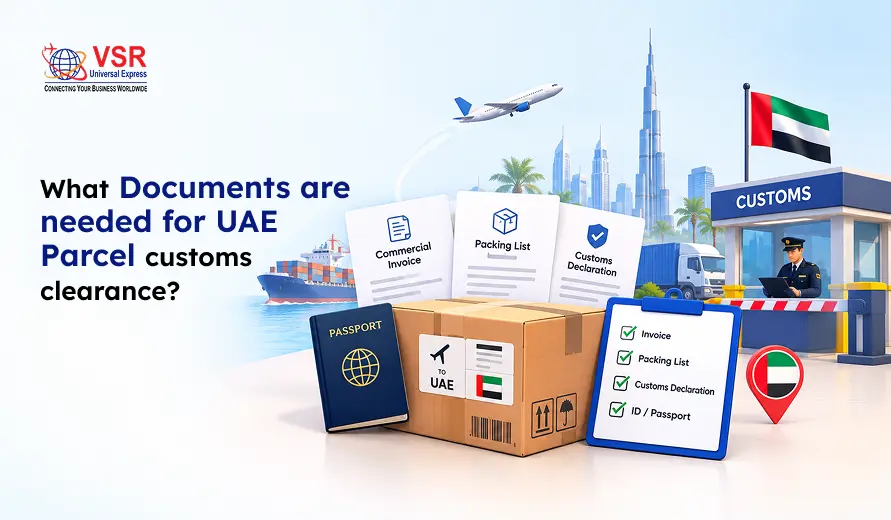
Sending a parcel to the United Arab Emirates is usually a straightforward process, but customs clearance can become complicated if the required documents are missing or contain incorrect information. Whether you are an individual sending a package to family, an online seller shipping products to customers, or a business importing goods, having the right paperwork can help prevent unnecessary delays.
Understanding the documentation required for UAE parcel customs clearance is an important step toward ensuring your shipment reaches its destination smoothly and on time.
In this guide, we explain the key documents generally required for parcel customs clearance in the UAE, why they are important, and what you should prepare before sending your shipment.
What Is UAE Parcel Customs Clearance?
UAE parcel customs clearance is the process through which customs authorities check shipments entering the United Arab Emirates to ensure that the goods comply with UAE import regulations.
During customs clearance, authorities may verify:
- What is inside the parcel
- The value of the goods
- The country of origin
- The intended recipient
- Whether customs duties or taxes apply
- Whether the goods require special permits
- Whether the shipment complies with UAE import regulations
Depending on the type, value, and purpose of the shipment, customs may request different documents.
Providing complete and accurate documentation can help reduce the possibility of delays.
1. Commercial Invoice
A commercial invoice is one of the most important documents for international shipments, particularly when goods are being sold or imported for commercial purposes. For UAE parcel customs clearance, the commercial invoice helps customs authorities verify the contents, value, and other important details of the shipment.
The invoice normally includes information such as:
- Sender's full name and address
- Recipient's full name and address
- Description of the goods
- Quantity of each item
- Unit price and total value
- Currency
- Country of origin
- Reason for export
- Shipping terms, where applicable
For parcel customs clearance in the UAE, the description of the goods should be clear and specific. Avoid using vague descriptions such as "items," "samples," or "products."
For example, instead of writing "clothes," a more detailed description could be "men's cotton T-shirts, 5 pieces."
2. Packing List
A packing list provides additional information about the contents of a shipment.
It may include:
- Number of packages
- Description of each item
- Quantity
- Weight
- Dimensions
- Packaging type
- Reference or shipment number
While a packing list may not be required for every small parcel, it can be particularly useful for business shipments or packages containing multiple products.
The information on the packing list should match the commercial invoice and shipping documents. Differences between documents can result in questions from customs and may delay the clearance process.
3. Recipient's Identification Documents
For certain shipments, customs authorities or the courier company may require identification information from the recipient.
Depending on the shipment and clearance requirements, this may include details from:
- Emirates ID
- Passport
- UAE residence information
- Trade licence for businesses
The exact requirements can vary depending on the shipment, recipient, courier, and customs procedure.
If your courier requests identification documents, providing them promptly can help prevent unnecessary clearance delays.
4. Air Waybill or Courier Shipping Document
An Air Waybill (AWB) or courier shipping document identifies the shipment and provides important transportation information.
It normally contains:
- Sender information
- Recipient information
- Shipment tracking number
- Origin and destination
- Package weight
- Number of packages
- Shipping details
The AWB allows the courier, customs authorities, and other parties involved in the shipment to identify and process the parcel.
Always make sure that the information on your shipping document is accurate and matches the other documentation.
5. Proof of Value or Purchase Invoice
Customs authorities may need to establish the actual value of imported goods.
For online purchases, this may be demonstrated through:
- E-commerce order confirmation
- Seller invoice
- Payment receipt
- Purchase receipt
- Transaction record
This information can help customs determine whether duties, taxes, or other charges apply.
If the declared value does not appear reasonable compared with the goods being shipped, customs may request additional evidence.
For this reason, it is important to provide an accurate value rather than deliberately declaring a lower value.
6. Import Permits or Special Approvals
Some products may require additional approvals or permits before they can be imported into the UAE.
This can depend on the nature of the goods. Certain categories may be subject to specific regulatory requirements.
Examples can include:
- Food products
- Medicines
- Medical equipment
- Cosmetics
- Agricultural products
- Certain electronic equipment
- Chemicals
- Controlled or regulated products
If you are sending goods that fall into a regulated category, check the applicable requirements before shipping.
Failing to obtain the required approval can result in clearance delays, additional procedures, or the shipment being held by authorities.
7. Certificate of Origin
A Certificate of Origin identifies the country where the goods were manufactured or produced.
This document may be required for certain commercial shipments, depending on the nature and value of the goods and the applicable customs requirements.
For regular personal parcels, it may not always be necessary. However, businesses importing commercial goods should determine whether a Certificate of Origin is required for their shipment.
Providing accurate country-of-origin information is important because customs procedures can differ depending on the goods and their origin.
8. Customs Declaration Information
Customs declarations contain information that allows authorities to assess the shipment.
When preparing your parcel, you may need to provide details such as:
- Description of goods
- Quantity
- Value
- Weight
- Country of origin
- Sender information
- Recipient information
- Purpose of shipment
The declaration should be truthful and complete.
Incorrect or incomplete declarations are among the common reasons shipments may require additional information during UAE customs clearance for parcels.
Personal Shipments vs. Commercial Shipments
The documentation required can differ depending on whether you are sending a personal parcel or a commercial shipment.
Personal Parcels
For personal shipments, you may generally need:
- Shipping or airway bill
- Accurate description of goods
- Declared value
- Recipient information
- Identification information when requested
- Purchase proof, where applicable
Additional documents may be requested depending on the contents of the parcel.
Commercial Shipments
Commercial shipments may require more extensive documentation, such as:
- Commercial invoice
- Packing list
- Air waybill
- Certificate of origin
- Import-related documentation
- Trade licence information
- Product-specific permits or approvals
Businesses should prepare their documentation before the shipment is dispatched to minimize potential delays.
Why Accurate Documentation Matters
Providing correct documents is one of the simplest ways to make parcel customs clearance in the UAE more efficient.
Incorrect information can lead to:
- Customs delays
- Requests for additional documents
- Additional handling procedures
- Storage-related issues
- Unexpected charges
- Shipment returns in some circumstances
For example, if a parcel contains five products but the invoice only lists three, customs or the courier may request clarification.
Similarly, if the declared value is significantly different from the actual purchase value, additional proof may be requested.
The best approach is to provide accurate and consistent information across all documents.
Common Documentation Mistakes to Avoid
When preparing a shipment for UAE courier customs clearance, avoid these common mistakes:
Using vague product descriptions
"Goods" or "personal items" does not provide enough information in many situations. Describe the actual contents clearly.
Incorrect declared value
Do not intentionally undervalue goods to try to reduce customs charges. The declared value should accurately represent the shipment.
Mismatched documents
Make sure the invoice, packing list, shipping label, and other documents contain consistent information.
Missing recipient details
Incorrect names, addresses, telephone numbers, or other recipient information can create problems during delivery and clearance.
Ignoring restricted goods requirements
If your shipment contains regulated products, check whether additional permits or approvals are required before dispatch.
How a Courier Service Can Help
Working with an experienced courier or logistics provider can make the customs process easier.
A professional courier company can help customers understand documentation requirements, prepare shipping information, and coordinate the clearance process with the relevant parties.
If you regularly send parcels to the UAE, choosing a courier that has experience with international shipments can be particularly useful.
For businesses, reliable parcel clearance services in the UAE can also help streamline recurring shipments and reduce administrative complications.
However, the shipper remains responsible for providing truthful and accurate information about the contents and value of the shipment.
Checklist for UAE Parcel Customs Clearance
Before sending your parcel, use this simple checklist:
- Sender details are complete.
- Recipient details are accurate.
- Goods are clearly described.
- Quantity is correctly stated.
- Shipment value is accurate.
- Commercial invoice is prepared if required.
- Packing list is prepared if required.
- Air waybill/shipping document is completed.
- Proof of purchase is available when needed.
- Required permits or approvals have been obtained.
- Country of origin is correctly stated.
- Supporting identification documents are available if requested.
Preparing these documents in advance can make the shipping process more efficient.
Final Words
Understanding the documentation required for UAE parcel customs clearance can help individuals and businesses avoid many common shipping problems. While the exact requirements depend on the type of goods, shipment value, sender, recipient, and purpose of import, accurate documentation is always important.
For most shipments, key information includes the parcel's contents, value, sender and recipient details, and transportation information. Commercial shipments may require additional documents such as commercial invoices, packing lists, certificates of origin, and relevant permits.
Before sending your parcel, check the latest requirements with your courier or the relevant UAE customs authority, particularly if you are shipping regulated or commercial goods.
If you want a smooth international shipping experience, working with an experienced courier and customs clearance provider can help you understand the process and prepare the necessary documentation correctly.
Table of Contents
- What Is UAE Parcel Customs Clearance?
- 1. Commercial Invoice
- 2. Packing List
- 3. Recipient's Identification Documents
- 4. Air Waybill or Courier Shipping Document
- 5. Proof of Value or Purchase Invoice
- 6. Import Permits or Special Approvals
- 7. Certificate of Origin
- 8. Customs Declaration Information
- Personal Shipments vs. Commercial Shipments
- Personal Parcels
- Commercial Shipments
- Why Accurate Documentation Matters
- Common Documentation Mistakes to Avoid
- Using vague product descriptions
- Incorrect declared value
- Mismatched documents
- Missing recipient details
- Ignoring restricted goods requirements
- How a Courier Service Can Help
- Checklist for UAE Parcel Customs Clearance
- Final Words